
Breathing Exercises are simple techniques that help reduce stress, improve lung function, boost energy, and promote mental calmness and overall well-being.
Breathing Exercises: A Simple Way to Improve Health, Reduce Stress, and Increase Energy
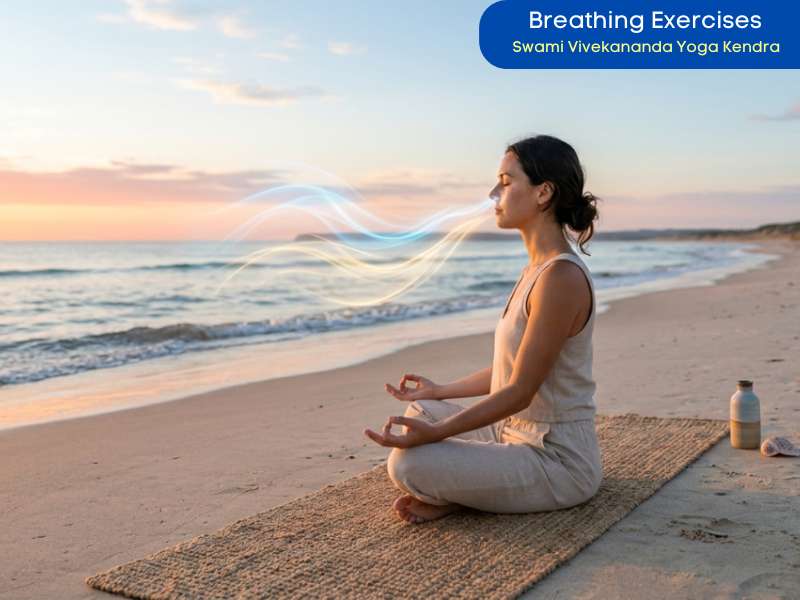
Breathing is something we do every moment without thinking about it. However, most people are unaware that the way they breathe can significantly impact their physical health, mental well-being, and emotional balance. Poor breathing habits often contribute to stress, fatigue, anxiety, and lack of focus.
Breathing Exercises are simple techniques that help improve breathing patterns, increase oxygen flow, calm the mind, and enhance overall wellness. Practiced for centuries in yoga and meditation, breathing exercises are now widely recognized as an effective way to manage stress and improve health naturally.
At Swami Vivekanad Yoga Kendra, we encourage individuals to include breathing exercises in their daily routine to achieve better physical, mental, and emotional well-being.
What Are Breathing Exercises?
Breathing Exercises are controlled breathing techniques designed to improve the efficiency of the respiratory system and promote relaxation. These exercises involve conscious inhaling, exhaling, and sometimes holding the breath in a specific pattern.
Unlike normal breathing, breathing exercises encourage deeper and more mindful breaths, helping the body receive more oxygen while calming the nervous system.
These practices are commonly used in yoga, meditation, stress management programs, and overall wellness routines.
Why Are Breathing Exercises Important?
Many people breathe shallowly, especially when stressed or anxious. Shallow breathing can reduce oxygen supply to the body and increase feelings of tension.
Importance of Breathing Exercises
Improve oxygen flow throughout the body
Help reduce stress and anxiety
Support lung health
Increase energy levels
Improve concentration and mental clarity
Promote relaxation and emotional balance
Regular practice can make a noticeable difference in overall health and quality of life.
Benefits of Breathing Exercises
Breathing exercises offer numerous benefits for both the body and mind.
Reduces Stress and Anxiety
One of the biggest benefits of breathing exercises is their ability to calm the nervous system. Slow and controlled breathing helps reduce stress hormones and promotes feelings of relaxation.
When practiced regularly, breathing exercises can help manage anxiety, nervousness, and emotional tension more effectively.
Improves Lung Capacity
Deep breathing helps expand the lungs and improves their efficiency. This can support respiratory health and help individuals develop better breathing habits.
Improved lung function can lead to:
Better oxygen intake
Improved stamina
Enhanced overall respiratory health
Increases Energy Levels
When the body receives more oxygen, cells function more efficiently. This often leads to increased energy, reduced fatigue, and improved physical performance.
Many people feel refreshed and energized after practicing breathing exercises.
Enhances Focus and Concentration
Breathing exercises help calm mental distractions and improve clarity. By focusing on the breath, the mind becomes more centered and attentive.
Benefits include:
Better concentration
Improved memory
Increased productivity
Enhanced decision-making
Supports Better Sleep
Stress and overthinking often interfere with sleep quality. Practicing breathing exercises before bedtime can relax the mind and body, making it easier to fall asleep peacefully.
Regular practice may help:
Improve sleep quality
Reduce insomnia symptoms
Promote deeper relaxation
Promotes Emotional Balance
Breathing exercises encourage mindfulness and emotional awareness. They help individuals respond more calmly to stressful situations and maintain emotional stability.
Popular Types of Breathing Exercises
There are several breathing techniques that can be practiced by beginners and experienced practitioners alike.
Deep Breathing
Deep breathing involves taking slow, full breaths that expand the lungs completely.
Benefits:
Reduces stress
Improves oxygen flow
Promotes relaxation
Diaphragmatic Breathing
Also known as belly breathing, this technique focuses on using the diaphragm instead of shallow chest breathing.
Benefits:
Improves breathing efficiency
Reduces tension
Enhances relaxation
Alternate Nostril Breathing (Nadi Shodhana)
A traditional yogic breathing technique where breathing alternates between nostrils.
Benefits:
Balances the mind and body
Improves focus
Reduces stress
Box Breathing
This technique involves inhaling, holding, exhaling, and holding the breath again for equal counts.
Benefits:
Improves concentration
Promotes calmness
Helps manage anxiety
4-7-8 Breathing Technique
This method involves inhaling for four counts, holding for seven counts, and exhaling for eight counts.
Benefits:
Encourages relaxation
Supports better sleep
Reduces anxiety
How to Practice Breathing Exercises
Practicing breathing exercises is simple and can be done almost anywhere.
Step 1: Find a Comfortable Position
Sit or lie down comfortably in a quiet place where you can focus without distractions.
Step 2: Relax Your Body
Release tension from your shoulders, neck, and facial muscles.
Step 3: Focus on Your Breath
Pay attention to your breathing and begin taking slow, deep breaths.
Step 4: Follow a Technique
Choose a breathing exercise and practice it for a few minutes.
Step 5: Stay Consistent
Practice daily to experience the maximum benefits over time.
Tips for Making Breathing Exercises a Daily Habit
Start Small
Begin with 5 minutes daily and gradually increase the duration.
Practice in the Morning
Morning breathing exercises can help energize the body and improve focus for the day.
Use Them During Stressful Moments
Breathing exercises are effective tools for calming the mind during challenging situations.
Combine with Meditation
Practicing breathing exercises before meditation can deepen relaxation and improve focus.
Stay Consistent
Regular practice produces the best long-term results.
Common Challenges Beginners Face
Feeling Lightheaded
Some beginners may feel slightly dizzy if they breathe too quickly. Slow down and breathe naturally.
Difficulty Concentrating
It is normal for the mind to wander. Gently return your attention to your breath.
Inconsistent Practice
Creating a fixed routine can help develop consistency.
Expecting Immediate Results
Breathing exercises provide gradual benefits that become more noticeable with regular practice.
How Breathing Exercises Improve Daily Life
Regular breathing exercises can positively impact everyday life by:
Reducing stress and anxiety
Improving focus and productivity
Increasing energy levels
Supporting emotional well-being
Enhancing sleep quality
Promoting a greater sense of calm and balance
These benefits make breathing exercises a valuable addition to any wellness routine.
1. What are Breathing Exercises?
Breathing Exercises are techniques that involve controlled breathing patterns to improve physical, mental, and emotional well-being.
2. How long should I practice Breathing Exercises daily?
Beginners can start with 5–10 minutes daily and gradually increase the duration as they become comfortable.
3. Can Breathing Exercises reduce stress?
Yes, breathing exercises help calm the nervous system and are highly effective for reducing stress and anxiety.
4. Are Breathing Exercises suitable for beginners?
Yes, most breathing exercises are simple, safe, and suitable for people of all ages and experience levels.
transform Your Life with us: Join Our Online Classes Now:
Ready to dive into a world of wellness? Come join us for some Online meditation classes to find your inner calm, hop into our Online yoga classes to take your practice up a notch, or why not even become a certified
yoga teacher? Embrace the power of yoga today and let it lead you to a happier, healthier you!



Comments are closed.