
In today’s busy and demanding world, anxiety has become a common experience for many people. Racing thoughts, constant worry, and emotional tension can affect both mental and physical health. Practicing meditation for anxiety is a gentle and natural way to calm the mind, soothe the nervous system, and restore inner peace. At Swami Vivekananda Yoga Kendra, we guide individuals through traditional yogic meditation practices that promote emotional balance, clarity, and well-being.
🧘 What Is Meditation for Anxiety?
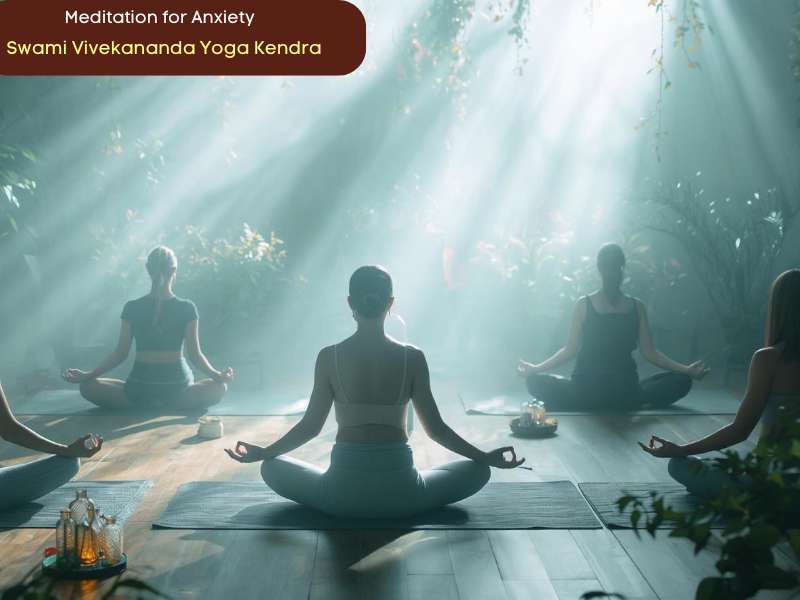
Meditation for anxiety is a mindful practice that helps you become aware of your thoughts without being overwhelmed by them. Instead of fighting anxious thoughts, meditation teaches you to observe them calmly and gently return your focus to the present moment.
This practice helps to:
Quiet an overactive mind
Reduce stress and emotional tension
Improve awareness and self-control
Create a sense of inner safety and calm
💖 How Meditation Helps Reduce Anxiety
1️⃣ Calms the Nervous System
Meditation activates the body’s relaxation response, shifting it out of “fight or flight” mode and into a state of calm, which naturally reduces anxiety symptoms.
2️⃣ Reduces Overthinking and Worry
By focusing on the breath or a mantra, meditation slows racing thoughts and helps break the cycle of constant worry.
3️⃣ Improves Emotional Stability
Regular meditation strengthens emotional resilience, making it easier to handle stress, challenges, and emotional triggers.
4️⃣ Enhances Sleep and Rest
A calm mind leads to better sleep. Meditation relaxes both the body and mind, helping you fall asleep faster and enjoy deeper rest.
🌼 Simple Meditation Techniques for Anxiety
🪷 Breath Awareness Meditation
This is one of the simplest and most effective techniques.
Sit comfortably with your spine straight.
Close your eyes and focus on your natural breath.
Gently bring your attention back whenever the mind wanders.
Practice for 5–15 minutes daily.
🧠 Body Scan Meditation
This technique helps release physical tension linked to anxiety.
Slowly bring attention to each part of the body.
Notice any tightness and allow it to soften.
Continue from head to toe for deep relaxation.
🌸 Mantra Meditation
Repeating a calming word or phrase helps steady the mind.
Choose a peaceful mantra (such as “Om” or “Shanti”).
Repeat it softly or mentally.
Let the sound calm your thoughts and emotions.
🌙 Loving-Kindness Meditation
This practice nurtures compassion and emotional healing.
Send kind thoughts to yourself and others.
Repeat phrases like “May I be peaceful” or “May all beings be well.”
This helps reduce fear, anger, and emotional tension.
🌱 Meditation for Anxiety in Yogic Healing
At Swami Vivekananda Yoga Kendra, meditation is combined with yoga asanas, pranayama, and relaxation techniques to create a holistic approach to anxiety management. This integrated practice:
Balances the mind and emotions
Improves energy flow (Prana)
Strengthens mental clarity and focus
Supports overall mental and emotional well-being
🌞 Physical Health Benefits of Meditation for Anxiety
Meditation not only calms the mind but also supports the body’s physical systems.
Lowers blood pressure and heart rate: Regular meditation relaxes the cardiovascular system, reducing strain on the heart and improving circulation.
Improves digestion: A calm nervous system supports better digestion and nutrient absorption.
Reduces muscle tension and fatigue: Meditation helps release tight muscles, easing body aches and improving overall comfort.
Boosts immunity: Lower stress levels strengthen the immune system, helping the body stay healthy and resilient.
🌼 Emotional and Spiritual Growth Through Meditation
Meditation nurtures emotional balance and inner awareness.
Builds emotional resilience: Regular practice strengthens your ability to face challenges calmly and confidently.
Encourages self-awareness: Meditation helps you understand your thoughts and emotions more clearly.
Promotes inner peace: Stillness of mind brings a deep sense of calm and contentment.
Supports spiritual connection: In yogic tradition, meditation opens the path to self-discovery and higher consciousness.
1. How often should I practice meditation for anxiety?
Daily practice for 10–20 minutes is ideal for best results.
2. Can meditation replace medication for anxiety?
Meditation is a supportive practice, but it should not replace medical treatment without consulting a healthcare professional.
3. Is meditation suitable for beginners with anxiety?
Yes, meditation is gentle and safe for beginners. Simple breathing and awareness practices are a great starting point.
4. How long does it take to see results from meditation?
Some people feel calmer immediately, while long-term benefits usually develop with consistent practice over weeks.
Transform Your Life with us: Join Our Online Classes Now:
Ready to dive into a world of wellness? Come join us for some online meditation classes to find your inner calm, hop into our online yoga classes to take your practice up a notch, or why not even become a certified yoga teacher? Embrace the power of yoga today and let it lead you to a happier, healthier you!

Comments are closed.