
Yoga is a divine journey that connects the body, mind, and soul. At Swami Vivekananda Yoga Kendra, among the many seated meditation poses, Baddha Padmasana (Bound Lotus Pose) holds a special place. This advanced yoga posture enhances stability, improves concentration, and prepares the body for deep meditation. Many yogis practice it for its spiritual and physical benefits.
🌿 What is Baddha Padmasana (Bound Lotus Pose)?
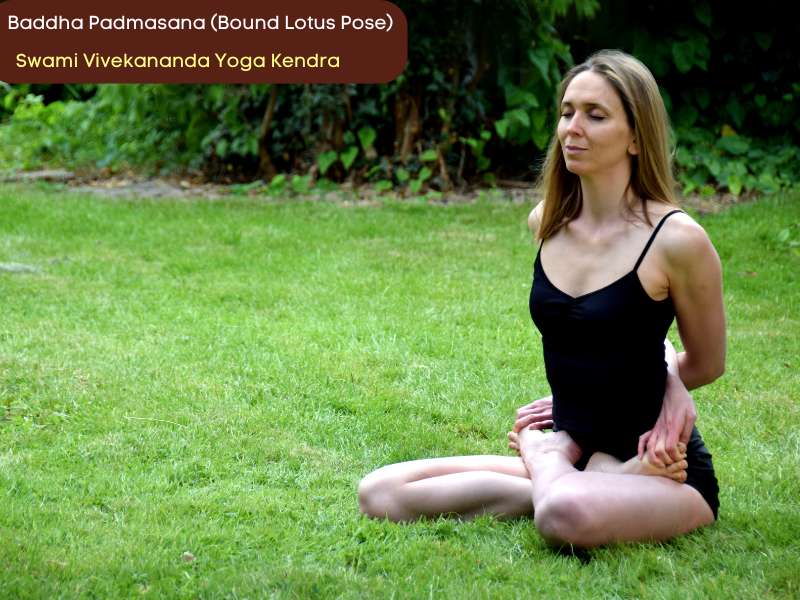
Baddha Padmasana, also known as the Bound Lotus Pose, is a seated yoga posture where the legs are folded into the lotus position and the hands are bound behind the back, holding the toes. It is considered a meditative asana that brings calmness, flexibility, and energy flow.
✅ How to Do Baddha Padmasana (Bound Lotus Pose)(Step by Step)
1. Start with Padmasana (Lotus Pose) – Sit on the floor, cross your legs, and place each foot on the opposite thigh.
2. Stretch Your Arms Back – Slowly move both arms behind your back.
3. Hold the Toes – With your right hand, hold the right big toe and with your left hand, hold the left big toe.
4. Keep Your Spine Straight – Sit tall with a straight back and relaxed shoulders.
5. Close Your Eyes – Breathe deeply and stay in the pose for 30 seconds to 1 minute.
Release Gently – Slowly release your hands and legs back to a normal sitting position.
🌟 Benefits of Baddha Padmasana (Bound Lotus Pose)
✅ Enhances Flexibility – This pose deeply stretches the hips, thighs, shoulders, and chest. Regular practice makes the body more supple and helps reduce stiffness, especially in the lower body.
✅ Boosts Digestion – The gentle pressure on the abdominal area stimulates digestive organs. It helps in improving metabolism, reducing bloating, and supporting overall gut health.
✅ Improves Posture – Sitting in this pose naturally lengthens the spine, encouraging an upright and steady posture. It helps in correcting slouching and strengthening the back muscles.
✅ Promotes Mental Calmness – Baddha Padmasana is highly beneficial for calming the mind. The stillness of the posture supports meditation, reduces stress, and relieves anxiety.
✅ Strengthens Joints – By engaging the knees, ankles, and hips, this pose builds strength and mobility in the joints, keeping them flexible and healthy.
✅ Increases Energy Flow – This asana enhances the circulation of prana (life force energy) throughout the body, making you feel more energetic and balanced.
✅ Supports Meditation – Baddha Padmasana provides stability and comfort, allowing yogis to sit in meditation for longer periods without strain.
✅ Detoxifies the Body – The posture stimulates abdominal organs, improving blood circulation and helping the body release toxins naturally.
✅ Balances Emotions – Sitting calmly in this asana helps control mood swings, promotes emotional balance, and enhances inner peace.
✅ Improves Lung Capacity – As the chest opens up, it encourages deeper breathing, strengthening the lungs and improving oxygen intake.
✅ Spiritual Awakening – Traditionally, this pose is believed to activate energy centers (chakras), making it a powerful asana for spiritual growth and awareness.
🧘 Tips for Beginners
-
Start with simple Padmasana before attempting the bound version.
-
Do regular hip-opening stretches to avoid strain.
-
Practice under the guidance of a yoga teacher if you are new.
Q1. What is Baddha Padmasana (Bound Lotus Pose)?
A1. It is an advanced yoga posture where the legs are placed in lotus position and the hands reach behind the back to hold the toes.
Q2. Who should avoid Baddha Padmasana?
A2. People with knee, hip, or back injuries should avoid this asana. Pregnant women should also refrain.
Q3. How long should I hold Baddha Padmasana?
A3. Beginners can start with 20–30 seconds and gradually increase to 2–3 minutes with practice.
Q4. What are the spiritual benefits of Baddha Padmasana?
A4. It enhances inner peace, improves concentration, and prepares the practitioner for deep meditation.
❓ बद्ध पद्मासन क्या है?
👉 बद्ध पद्मासन एक उन्नत योगासन है जिसमें पद्मासन (कमल मुद्रा) में बैठकर हाथों को पीठ के पीछे से क्रॉस करके पैरों की उंगलियों को पकड़ा जाता है। यह आसन ध्यान, एकाग्रता और शारीरिक स्थिरता बढ़ाने के लिए किया जाता है।
❓ बद्ध पद्मासन कैसे करें?
सबसे पहले पद्मासन में बैठ जाएं। दाहिने पैर को बाईं जांघ पर और बाएं पैर को दाहिनी जांघ पर रखें। अब पीठ के पीछे से दाहिने हाथ को घुमाकर दाहिने पैर की उंगलियों को पकड़ें। इसी तरह बाएं हाथ से बाएं पैर की उंगलियों को पकड़ें। रीढ़ सीधी रखें, आंखें बंद करें और सामान्य सांस लें। इस मुद्रा में 30 सेकंड से 2 मिनट तक रहें और फिर धीरे से वापस आएं।
❓ बद्ध पद्मासन के क्या फायदे हैं?
यह आसन ध्यान और मानसिक शांति के लिए अत्यंत लाभकारी है। यह पाचन शक्ति को सुधारता है और पेट की मांसपेशियों को सक्रिय करता है। रीढ़ की हड्डी को सीधा और मजबूत बनाने में मदद करता है। कंधे, छाती और हाथों की लचीलेपन को बढ़ाता है। लंबे समय तक ध्यान और प्राणायाम करने में सहायक है।
🌿 Why You Should Try Baddha Padmasana (Bound Lotus Pose)
Baddha Padmasana (Bound Lotus Pose) is not just a yoga posture, it is a doorway to inner stillness and spiritual growth. This advanced seated pose combines the stability of Padmasana with the grounding of a bind, making it ideal for meditation and pranayama. It strengthens your body, calms your mind, and prepares you for a deeper yogic journey.
At Swami Vivekananda Yoga Kendra, we believe yoga is the key to holistic health and spiritual growth. Start your yoga journey with expert guidance and discover the transformative benefits of poses like Baddha Padmasana (Bound Lotus Pose). 🌿
👉 Join our classes today and experience the true essence of yoga!
Transform Your Life with us: Join Our Online Classes Now:
Ready to dive into a world of wellness? Come join us for some online meditation classes to find your inner calm, hop into our online yoga classes to take your practice up a notch, or why not even become a certified yoga teacher? Embrace the power of yoga today and let it lead you to a happier, healthier you!
This Baddha Padmasana (Bound Lotus Pose) is part of the classic 84 Yoga Asanas list with pictures and names. Visit our full guide to explore steps, health benefits, and practice tips.

Comments are closed.